

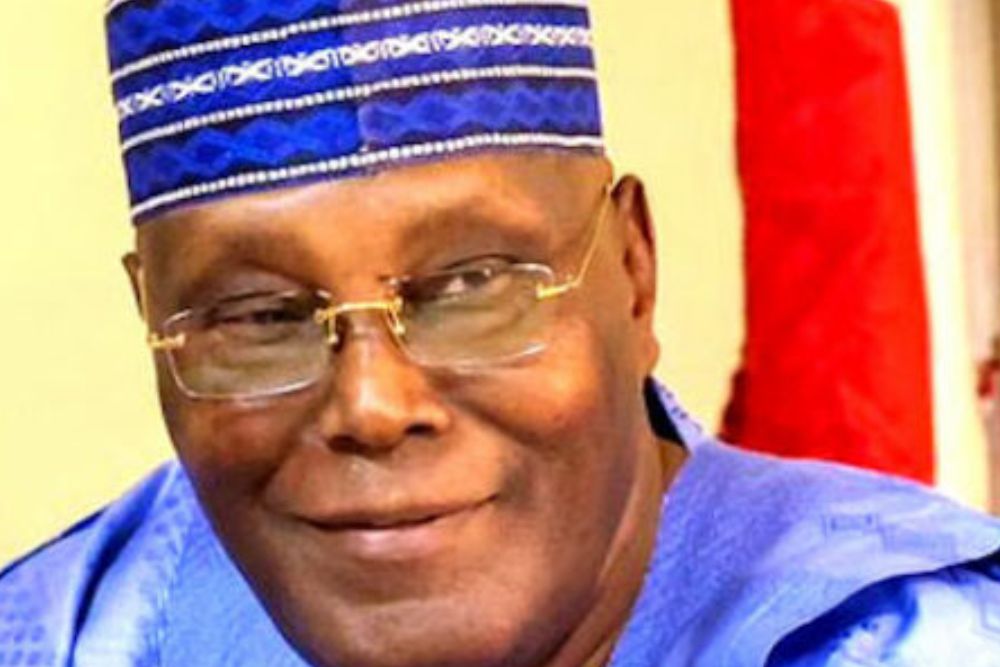
Malabu Oil refutes Atiku's claims, stating he lacks authority to speak for the company. They deny ownership links to Abacha or Pecos, citing CAC records as proof of legitimate shareholders. This follows a federal agreement on OPL 245, sparking renewed ownership disputes.
OPL 245 Row: Malabu Oil Refutes Atiku’s Remarks, Denies Abacha, Pecos Ownership Claims
Malabu Oil and Gas Limited has distanced itself from comments made by former Vice-President Atiku Abubakar regarding the controversial OPL 245 oil block, insisting that he has no authority to speak for the company or its shareholders.
The company also rejected claims linking its ownership to Mohammed Abacha, son of former military ruler Sani Abacha, and Pecos Energy Limited, stating that such assertions are false and unsupported by official records.
In a statement issued on Friday, Malabu maintained that its ownership structure is clearly documented in the records of the Corporate Affairs Commission (CAC), which it described as the legally recognised authority on the company’s shareholding.
“Abubakar Atiku has no ownership interest and cannot speak on Malabu’s behalf,” the company said.
It added that statements attributed to the former vice-president regarding Malabu or the OPL 245 dispute do not represent the company’s position.
The renewed controversy comes weeks after the Federal Government announced that it had reached a resolution agreement with Eni and Nigerian Agip Exploration Limited (NAEL) over the disputed oil block.
The presidency disclosed on March 5 that the agreement would allow the conversion of Oil Prospecting Licence (OPL) 245 into an Oil Mining Licence (OML), paving the way for oil production after years of legal and diplomatic disputes surrounding the asset.
However, the development triggered fresh contestations over the ownership of Malabu Oil and Gas, the company originally awarded the oil block in 1998 during the Abacha administration.
On March 6, Mohammed Abacha initiated legal steps to challenge the federal government’s resolution, seeking to assert what he described as his ownership rights in the company.
The dispute escalated further after Atiku Abubakar criticised the federal government’s decision to resolve the matter without the involvement of what he described as “critical stakeholders,” though he did not specify who those stakeholders were.
His remarks drew criticism from the Attorney-General of the Federation and Minister of Justice, Lateef Fagbemi, who described the comments as a misrepresentation of the government’s efforts to resolve the long-running dispute.
Fagbemi had earlier described the agreement with Eni and NAEL as a landmark achievement in settling a matter that has troubled Nigeria’s oil industry for decades.
Atiku subsequently responded by faulting the attorney-general’s position and defending his earlier remarks on the issue.
But Malabu Oil and Gas, reacting to the exchange, insisted that the former vice-president has no legal basis to speak on matters concerning the company.
The firm said only individuals whose names appear in official CAC records can legitimately claim ownership or represent the company.
“Claims that Malabu is owned by the Abachas or Pecos Limited are false and misleading,” the statement said.
“The rightful ownership is reflected in the Corporate Affairs Commission records, which govern and confirm the legitimate shareholders.”
Malabu also defended the 2011 settlement agreement involving the federal government and international oil companies that acquired interests in the oil block, saying the government at the time dealt with the legitimate owners of the company in accordance with due process.
According to the company, attempts by individuals or groups not recognised in official records to portray themselves as shareholders amount to a misrepresentation of facts.
It warned that such claims were misleading and urged commentators and media organisations to rely on CAC records and established court rulings when discussing the ownership of Malabu or the OPL 245 asset.
The company further stated that no court has recognised Mohammed Abacha, Pecos Energy Limited, or any other third party as owners of Malabu Oil and Gas.
According to the statement, the individuals claiming ownership had lost their cases both at the trial court and on appeal, and none of the rulings granted them legal ownership of the company.
Malabu therefore called on those it described as “impostors” to stop presenting themselves as shareholders or attempting to pressure the federal government over the OPL 245 issue.
It added that the government is currently dealing only with the legitimate shareholders of the company in line with legal provisions.
The firm also reiterated its commitment to transparency, due process and compliance with all regulatory requirements in its dealings.
Despite the company’s stance, the ownership of Malabu remains the subject of ongoing legal disputes.
Mohammed Abacha has continued his legal efforts to establish what he claims is his majority ownership of the company, which was awarded OPL 245 in 1998.
Another party associated with the dispute is Pecos Energy Limited, promoted by businessman Otunba Oyewole Fasawe, who has previously been linked to former President Olusegun Obasanjo.
Meanwhile, Dan Etete, who served as petroleum minister during the Abacha regime, had been recognised by the federal government as the beneficial owner of Malabu as far back as 2001.
Mohammed Abacha challenged that recognition in 2010, alleging that his name had been illegally removed from the company’s register at the CAC in 1998.
However, during proceedings at a High Court in the Federal Capital Territory, Abacha reportedly admitted that he did not pay for the shares he claimed in the company, a statement that legal observers said could weaken his ownership claim.
He also acknowledged that he used a pseudonym when the company was originally registered.
With multiple parties asserting interests and legal proceedings still ongoing, the battle over Malabu Oil and Gas and the lucrative OPL 245 oil block remains one of the most contentious disputes in Nigeria’s oil and gas industry.


No comments yet. Be the first to share your thoughts!