

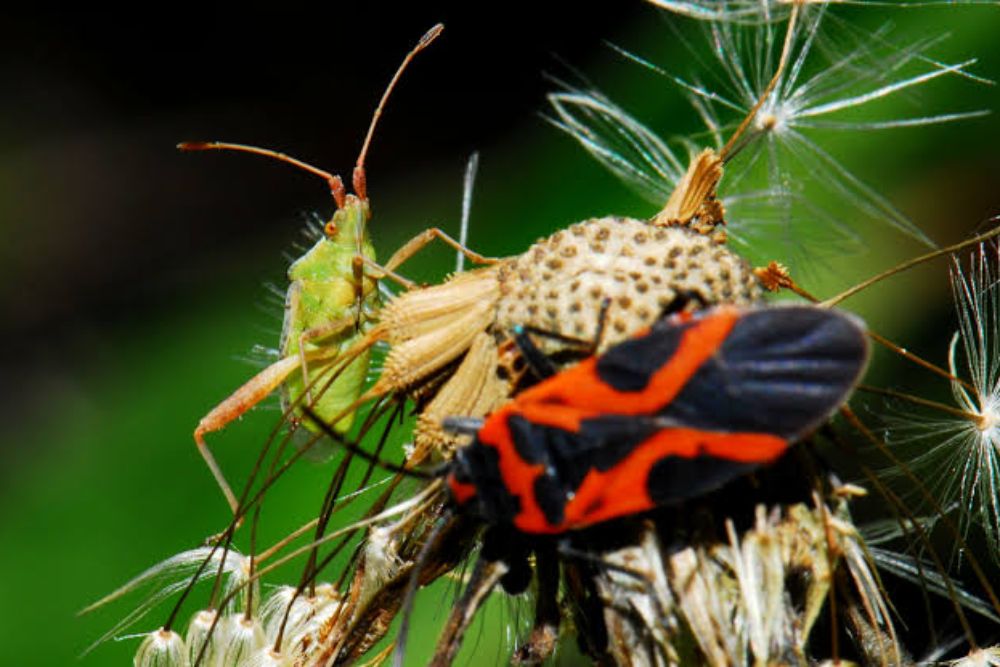
Insect populations are plummeting ("insect apocalypse") due to urbanization, light pollution, pesticide use & habitat loss. Scientists warn of potential species extinction and ecosystem collapse. Solutions exist (EU pesticide ban, rewilding), but widespread change is needed.
Truly, insect populations are fast declining in cities and urban areas, indicating a global trend of decline often referred to as the "insect apocalypse". Urbanization acts as a major stressor, with studies indicating that urbanization can lead to an average decrease of 42% in insect abundance and 40% in species richness compared to more natural and undeveloped habitats.
Before anyone throws a clenched fist up to say "riddance to those pestering flying pests, everyone needs to sit back and read about the threats this 'insects apocalypse' poses to the ecosystem. I believe Anish Moonka's tweets on the subject matter offers enough clarity- which I now share largely word for word:
Moonka, "A Danish scientist counted bugs on the same windshield, same road, same conditions, every year for 20 years. By year 20, 80% of the insects were gone.

In Germany, a group of volunteer bug scientists did something even bigger. They set traps in 63 nature reserves, not farms, protected land, and weighed everything they caught. Same traps, same method, 27 years straight. The total weight of flying bugs dropped 76%. In midsummer, when insects should be peaking, it was 82% gone. A follow-up in 2020 and 2021 checked again. No recovery.
In the UK, they literally ask drivers to count splats on their license plates after a trip. The 2024 count came back 63% lower than just 2021. Three years.
A 2020 study pulled together 166 surveys from 1,676 locations around the world. Land insects are disappearing at roughly 9% every ten years.
Here’s where it hits your plate. About 75% of the food crops we grow depend on insects to pollinate them, everything from apples to almonds to coffee. One 2025 study modeled what a full pollinator collapse would look like: food prices jump 30%, the global economy takes a $729 billion hit, and the world loses 8% of its Vitamin A supply.
Birds are already feeling it. North America has lost 2.9 billion birds since 1970. A study from just weeks ago found half of 261 bird species on the continent are now in serious decline, and the losses are speeding up in farming regions. The birds that eat insects lost 2.9 billion. The birds that don’t eat insects? They gained 26 million. That ratio tells the whole story.
One of the German researchers behind the 27-year study drives a Land Rover. He says it has the aerodynamics of a refrigerator. It stays clean now.
So why are the bugs disappearing? Almost every corn seed planted in America comes pre-coated with a pesticide called a neonicotinoid. Think of it as nicotine for bugs. It gets baked into the seed, and as the plant grows, the poison spreads through the whole thing, stems, leaves, pollen, nectar, all of it. About half of soybean seeds get the same treatment. In total, these pesticides cover around 150 million acres of U.S. farmland every year. That’s roughly the size of Texas.
Here’s the part that got me. The plant only absorbs about 2% of the pesticide on the seed. The other 98% washes off into the soil and water. A Penn State study found that 40% of farmers don’t even know their seeds are coated with it. The EU looked at the science, found “high acute risks” to bees, and banned three of the main ones from outdoor use in 2018. The U.S. still hasn’t. The neonicotinoid market hit $5.5 billion globally in 2023.
Pesticides aren’t the only problem. Streetlights are killing bugs at a scale nobody expected. UK researchers compared moth caterpillars near lit and unlit roads and found 47% fewer caterpillars near the lights. One German estimate puts the toll at 100 billion insects killed by artificial light per summer. And the new LED streetlights cities are installing to save energy? Worse for insects than the old yellow ones.
Then there’s the land itself. North America has lost 90% of its native grasslands. What replaced them is mostly single-crop farms stretching to the horizon, corn or soy with nothing else growing. For insects, that’s a desert with poison in it.
The EU banned the pesticides. The U.S. still sprays them across an area the size of Texas every planting season.
The rare good news in all of this: bugs bounce back fast when you stop killing them.
Four years after the EU banned those seed-coating pesticides, French researchers checked 57 bird species across 1,900 sites. Insect-eating birds were already recovering, up 2-3%. Small number, but the lead researcher said it matches what happened after DDT was banned decades ago. Full recovery took 10-25 years then. The clock just started.
In areas where farmers planted wildflower strips along their fields, insect numbers came back by 30%. Where European countries rewilded degraded land, insect species variety jumped 20%. Butterfly and moth populations rose 40% in restored grasslands and meadows. These aren’t projections. This is measured data from programs already running.
So the fixes work. The problem is scale.
Now the other side. At the current rate of decline, roughly 2.5% of total insect mass disappearing per year, researchers writing for the UN warned that insects could functionally vanish within a century. A 2019 review in Biological Conservation estimated 40% of all insect species are headed toward extinction, with insects going extinct eight times faster than mammals, birds, or reptiles. A 2018 study in Science calculated that at 2 degrees Celsius of warming, 18% of insect species lose more than half their geographic range. At 3.2 degrees, that jumps to nearly half of all insect species.
And these losses stack. When bugs disappear, the animals that eat them starve. Insect-eating birds in Europe dropped 13%. Bats lost up to 50% of their nightly food. Soil insects that break down dead plants and recycle nutrients fell 40% in affected areas, slowing the decomposition that keeps farmland fertile.
The EU looked at the data and acted. Recovery started within four years. The U.S. still coats 150 million acres in the same chemicals the EU banned. Every planting season, the clock runs a little further in the wrong direction."
-------------------------------------------------------------------------
Credit: Anish Moonka, @AnishA_Moonka
Other Sources: Over 75% Decline over 27 years in total flying insect biomass in protected areas: by: Caspar A. Hallmann, Martin Sorg, Eelke Jongejans, Henk Siepel, Nick Hofland, Heinz Schwan, Werner Stenmans, Andreas Müller, Hubert Sumser, Thomas Hörren, Dave Goulson, Hans de Kroon




No comments yet. Be the first to share your thoughts!