

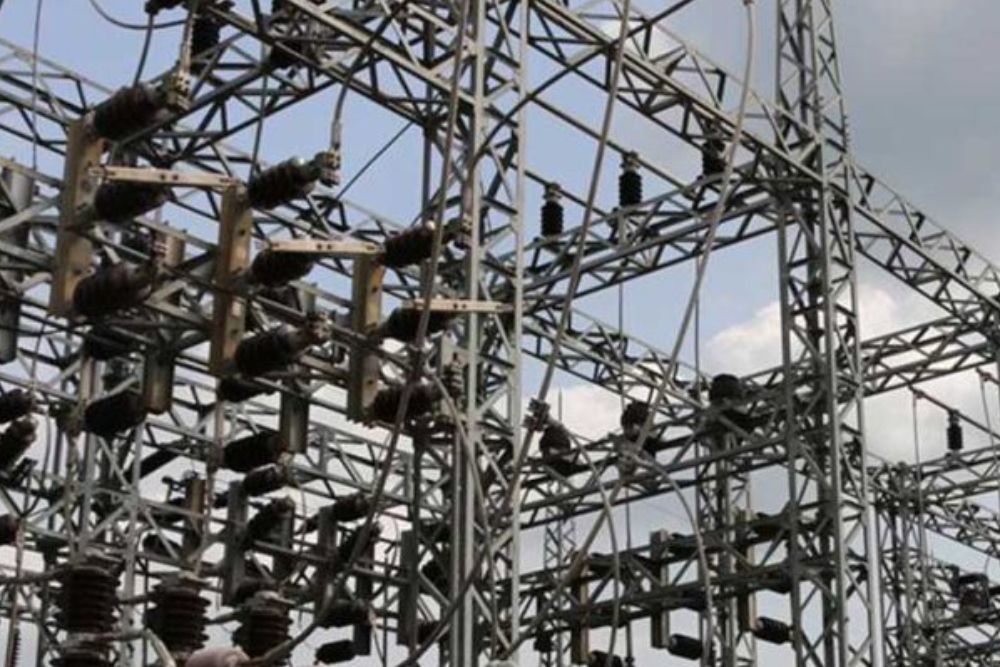
Nigeria's power sector faces crisis. GenCos owe ?3.3trn to gas suppliers, risking gas supply halt to thermal plants. This stems from NBET's delayed payments since 2013, leaving ?6.8trn in debt. Shortfalls worsen the situation, fueling potential blackouts.
Power Crisis Likely As Gas Suppliers Issue tlThreat, Set To Halt Supply Over ?3.3trn Debt
Adebayo Obajemu
Nigeria’s electricity sector may face a fresh crisis as gas suppliers are reportedly considering halting supply to thermal power plants over an estimated ?3.3 trillion debt owed by power generation companies (GenCos).
Joy Ogaji, Chief Executive Officer of the Association of Power Generation Companies (APGC), disclosed this during an interview with Fresh FM on Wednesday.
According to her, the growing debt burden in the power sector has placed generation companies under intense financial pressure, with gas suppliers now insisting on upfront payments before delivering fuel to thermal plants.
Ogaji explained that the root of the problem lies in the inability of the Nigerian Bulk Electricity Trading Plc (NBET) to fully pay generation companies for electricity supplied to the national grid since the sector was privatised in 2013.
She said the Federal Government currently owes GenCos about ?6.8 trillion for electricity already generated, with approximately 70 percent of the debt linked to thermal power plants.
“NBET is set up to buy power from GenCos and sell to distribution companies (DisCos). The aim is that as they buy power, they will pay in full, but since 2013 till today they’ve never paid in full, so this debt is now ?6.8 trillion,” she said.
Ogaji explained that about ?4.76 trillion of the total debt is tied to thermal plants, which rely on natural gas to generate electricity. Of that amount, around ?3.3 trillion is owed directly to gas suppliers.
She noted that the debt burden has been rising steadily over the years.
According to her, between 2015 and December 2024, the sector’s debt had grown to about ?4 trillion. In 2025 alone, monthly revenue shortfalls of about ?200 billion added another ?2.4 trillion to the deficit.
“In each month of 2025, there is a shortfall of ?200 billion. If you calculate ?200 billion times 12, that is ?2.4 trillion, making the whole debt ?6.4 trillion after December 2025,” she said.
Ogaji added that the outstanding amount rose further in early 2026, reaching ?6.6 trillion in January and ?6.8 trillion in February.
She warned that if the trend continues, the total debt could exceed ?7 trillion by the end of March.
The APGC chief explained that most of the outstanding payments relate to thermal plants because they produce the majority of electricity supplied to the national grid.
She said about 70 percent of Nigeria’s power generation currently comes from gas-fired plants, while the remaining portion is generated by hydroelectric facilities.
“The generation companies have hydro plants and thermal power plants. The thermal power plants use gas, while the hydro plants use water and do not owe gas suppliers,” she said.
“On the grid, we have about 30 power plants. Roughly 30 percent are hydro plants now because Zungeru has added 700 megawatts and there are other smaller hydro plants. So, the remaining 70 percent comes from gas.”
Ogaji said the payment structure means that for every ?100 invoiced by thermal plants for electricity generated, about ?70 is owed to gas suppliers.
She warned that the deepening debt crisis is already contributing to electricity shortages across the country.
“Correct to say that the debt is the reason why we are in darkness,” she said.
According to her, gas producers have continued supplying fuel to power plants despite the huge arrears, but their patience is wearing thin.
“The gas suppliers have really been very kind to us. They are the reason why the thermal plants are still generating power,” she said.
“But now they have told us that if there’s no payment, there will be no gas for the thermal power plants.”
Ogaji also noted that many generation companies are struggling to service loans obtained from banks during the 2013 power sector privatisation, further compounding the financial strain within the industry.
She warned that unless urgent measures are taken to address the mounting debt, Nigeria’s electricity supply could deteriorate further.



No comments yet. Be the first to share your thoughts!