

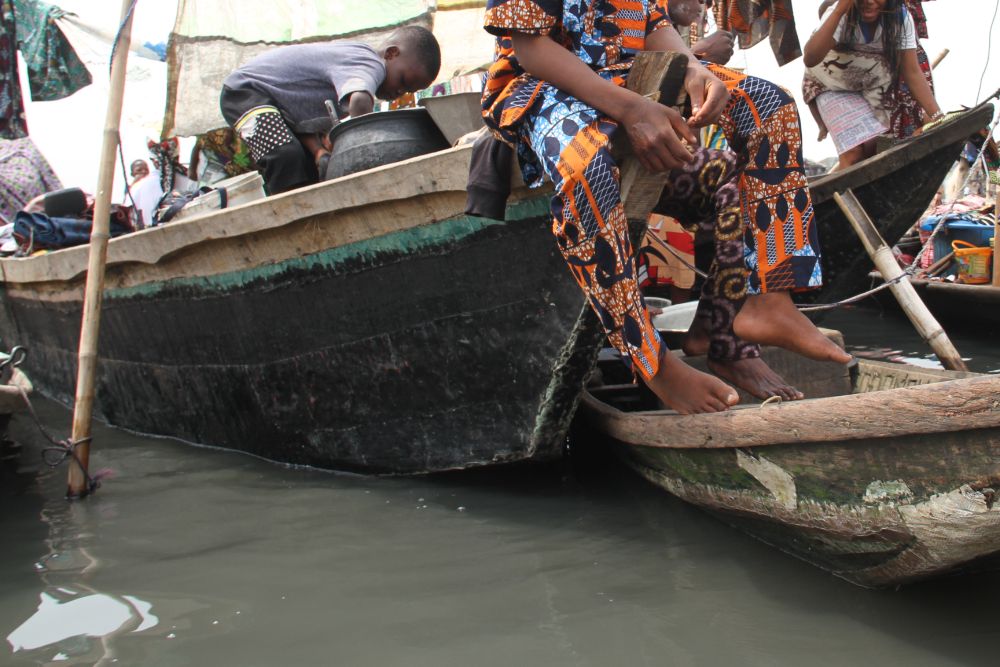
Makoko demolition highlights a long-standing environmental & health crisis. Residents lived without sanitation, clean water, & faced pollution, disease, & flooding. Demolition without resettlement is irresponsible. Public health is at risk. The situation demands urgent and sustainable solutions.
Makoko and the environmental health crisis within
Adebayo Obajemu
The January demolition of the Makoko slums have continued to occupy the front burner of public discourse.
The demolition was not a sudden rise like a meteor, it was expected given the cat and mouse relationship between the Lagos state authorities and the residents of the slums.
Many residents didn't believe the demolition exercise would come at the time given the length of appeals spanning many years from government for the residents to leave.
The uproar did not come until the caterpillars hit the location and those wooden structures in black waters started coming down like crumbling cookies.
The action of the government has elicited public outrage, legal battles, and political arguments about housing rights and urban development. But beyond the heated debate lies a more uncomfortable truth that Makoko is an environmental and public health emergency that has been normalised for far too long.
Before the caterpillars came, residents had been living on wooden houses built on stilts over polluted lagoon waters, without formal sanitation systems, waste collection, or reliable access to clean water.
It would seem demolition, without resettlement is a dead alley that leads no where.
Public health is under threat when people are displaced, in the obverse, ignoring environmental danger is equally irresponsible.
The environmental and health risks associated with Makoko slums could not be ignored. These are:
Pollution.
Residents live, fish, bathe, wash, relieve sewage, all on the same water. This has resulted in large scale exposure to cholera, typhoid, skin infections, and parasitic diseases, particularly among children. In a way, this has increased poverty level as limited means set aside to combat hunger are diverted to solving the health challenges arising from these diseases, instead of productive venture.
Open defecation and poor sewage disposal
Given the topography and government's neglect, and with only limited access to functional toilets, human waste often cascade back in the water or nearby surroundings. This has repeatedly led to a cycle of contamination.
Indoor and outdoor air pollution from cooking and waste burning
As a result of poverty, low level of education and environmental awareness, most households in Makoko still depend on firewood, charcoal, or mixed waste for cooking and fish smoking. This goes side by side with the burning of plastics and other refuse releases toxic fumes that are disastrous to the health and the environment.
Unclean water for cooking
There's this misguided, uninformed notion that dirty waters are invariably converted to clean during cooking, but there's no scientific proof that chemical pollutants and microbes may not remain in the water even after cooking and boiling. And this contributes to repeated diarrhoeal diseases, dehydration in children, and long-term gastrointestinal problems.
Exposure to mosquitoes and disease vectors
Stagnant water, poor drainage, and waste accumulation provide breeding grounds for mosquitoes and rodents, increasing the risk of malaria, dengue, and other vector-borne or rodent-borne diseases. The number of mosquito nets that is sent into Makoko by non-profits has been enormous. And hopefully the residents are making good use of them.
Flooding during heavy rains
Rising water levels and heavier rainfall linked to climate change now flood homes more frequently. Floodwaters carry sewage and chemical waste into living spaces, damaging property and forcing residents to suffer losses.




No comments yet. Be the first to share your thoughts!