

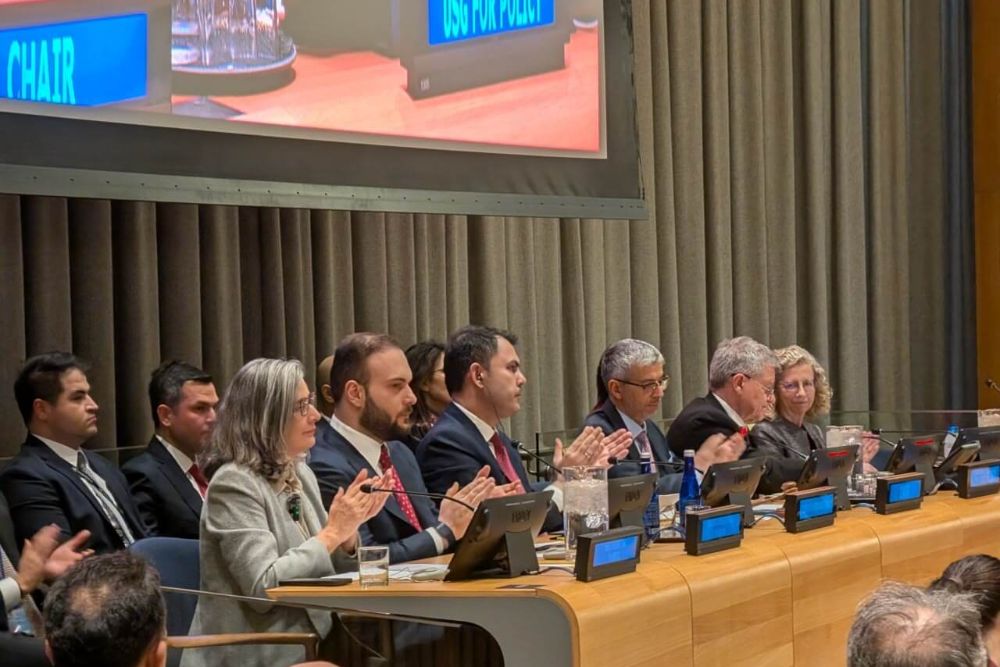
At the International Day of Zero
Waste on 30 March, 20 cities worldwide were named the
inaugural 20 Cities Towards Zero Waste, an initiative
led by the UN Secretary-General’s Advisory Board on Zero Waste, with support
from UN-Habitat and the UN Environment Programme (UNEP).
The
initiative highlights cities demonstrating ambitious and innovative approaches
to reducing waste, advancing circular economy solutions, and building more
sustainable, resilient, and inclusive urban systems.
The
selected cities are:
Accra
(Ghana), Bologna (Italy), Chefchaouen (Morocco), Dar es Salaam (Tanzania),
Dehiwala City (Sri Lanka), Florianópolis (Brazil), Gaziantep (Türkiye), George
Town (Malaysia), Hangzhou City (China), Iloilo City (Philippines), Kisumu
(Kenya), Kuala Lumpur (Malaysia), Lilongwe (Malawi), San Fernando
(Philippines), San Fransico (United States), Sanya City (China), Suzhou City
(China), Varkala (India), City of Yokohama (Japan) and Zapopan (Mexico).
Humanity
generates more than 2.1 billion tonnes of municipal solid waste annually,
making cities a vital part of global efforts to tackle the waste crisis and its
impacts on climate, biodiversity, public health, and livelihoods.
The 20
Cities Towards Zero Waste initiative aims to:
·
Recognize city leadership and innovation
·
Promote exchange of good practices and
lessons learned
·
Inspire other cities to accelerate their
transition toward zero waste
·
Support implementation of circular
economy approaches at the local level
While
still facing waste challenges, selected cities are implementing a wide range of
solutions, including food waste prevention, organic waste management, reuse and
refill systems, inclusive recycling models supporting informal workers,
policies to reduce single-use products, and community engagement initiatives to
drive behaviour change.
José
Manuel Moller, Deputy Chair of the UN Secretary-General’s Advisory Board on
Zero Waste, said: “These 20 cities
matter, not because they have the best roadmaps on paper, but because they are
turning ambition into action. What sets them apart is their willingness to
implement real solutions, from source segregation and composting to reuse
systems, informal sector inclusion, and citizen engagement. They are showing
that zero waste is not a distant vision or a communications exercise. It is
practical, local, and achievable when cities lead by example. At a time when
many are still planning, these cities are proving that implementation is the
real test of leadership.”
Inger
Andersen, UNEP Executive Director,
stated: “Solutions to pollution and waste are opportunities to reimagine our
economies through innovation, circularity, and equity. From strong producer
responsibility models in San Francisco (USA) and Suzhou City (China), to refill
systems in Bologna (Italy), and the inclusion of waste pickers in Kuala Lumpur
(Malaysia) and Zapopan (Mexico), the 20 Zero Waste Cities are proof of this.”
“We
commend the leadership and commitment of their citizens, authorities and the
private sector. These cities can inspire communities around the world to
accelerate action against the pollution and waste crisis,” she added.
Anacláudia
Rosbach, UN-Habitat Executive Director, said:
“Cities are at the frontline of the zero-waste transition. Local and regional
governments are managing waste systems; they are reshaping local economies,
influencing consumption patterns, and advancing inclusive solutions that
integrate informal workers and communities.”
“This
initiative underscores the critical role of cities as implementers of change.
It demonstrates how local action, when supported by strong governance and
partnerships, can accelerate the change toward more resilient, circular, and
inclusive urban systems,” she added.
The
initiative contributes directly to the Sustainable Development Goals,
particularly SDG 11 (Sustainable Cities and Communities), SDG 12 (Responsible
Consumption and Production), and SDG 13 (Climate Action). The selected cities
will be formally recognized in connection with the International Day of Zero
Waste and showcased on global platforms to share experiences and inspire
further action.
As
urban populations grow, the leadership of these cities underscores the critical
role of local governments in driving the transition toward a zero-waste and
circular future.
Source: UNEP




No comments yet. Be the first to share your thoughts!