

Deep-sea tubeworms, like Escarpia laminata, are incredibly long-lived (over 300 years!). They survive via symbiosis with bacteria, lacking mouths/stomachs. Slow metabolism and few predators contribute to their longevity.
Many of the ocean's longest-living creatuy can survive for centuries or even millennia by slowing their metabolism or effectively resetting their biological clocks.

1. The Immortal Jellyfish (Turritopsis dohrnii): This tiny creature (about 4.5 mm wide) is the only known animal capable of reversing its life cycle.
Biological "Reset": When faced with stress, injury, or starvation, it transforms from its adult "medusa" stage back into a juvenile "polyp" stage through a process called transdifferentiation.
How it Works: It absorbs its own tentacles and bell, turning into a cyst-like ball that settles on the seafloor to grow into a new polyp colony, which then produces new jellyfish identical to the original.
Immortality: Theoretically, it can repeat this cycle indefinitely, though in the wild, most are eaten by predators before they can reset.

2. Sponges and Corals (Glass Sponges & Black Corals): These organisms are the true record-holders for longevity, surviving for thousands of years in the deep, cold ocean.
Glass Sponges: These have skeletons made of silica (the main component of glass). Some specimens in Antarctica are estimated to be over 11,000 to 15,000 years old.
Black Corals: These are colonial organisms that grow extremely slowly in the deep sea. Radiocarbon dating on specimens found near Hawaii has revealed ages of over 4,200 years.
Survival Strategy: Their longevity is largely due to the stable, freezing environment of the deep sea and their incredibly slow metabolic rates.

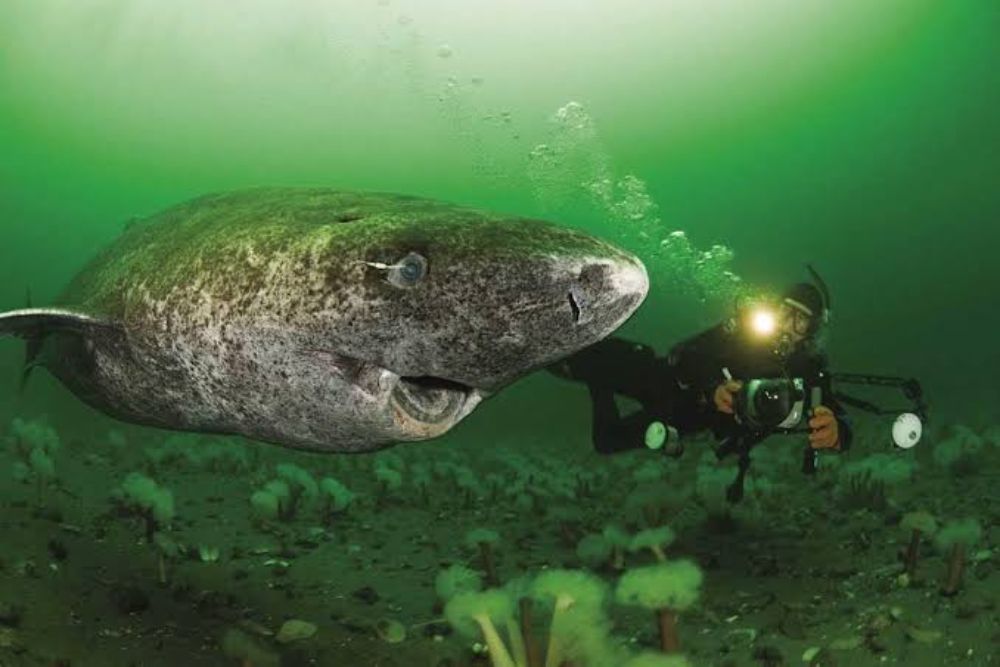
3. Greenland Shark (Somniosus microcephalus): The Greenland shark is officially the longest-living vertebrate on Earth.
Estimated Lifespan: They are confirmed to live at least 272 years, with some estimates reaching up to 512 years.
Aging Process: They grow at a rate of only about 1 cm per year and do not even reach sexual maturity until they are roughly 150 years old.
How We Know: Scientists determine their age by radiocarbon dating the lenses of their eyes, which contain proteins formed before the shark was born that never degrades.

4. Red Sea Urchin (Mesocentrotus franciscanus): Found along the rocky shores of the North Pacific, these urchins are masters of "negligible senescence," meaning they show no signs of aging as they get older.
Lifespan: While once thought to live only 10 years, they are now known to reach 200 years or more in colder regions like British Columbia.
Eternal Youth: They remain fully fertile throughout their lives and can regenerate lost spines.
Genetics: They maintain their DNA health by not experiencing the typical shortening of telomeres (the protective caps on chromosomes) that causes aging in humans.

5. Tubeworms (Escarpia laminata): While "Bobbit" worms only live a few years, the deep-sea tubeworms found near cold seeps and hydrothermal vents are among the longest-lived animals.
Lifespan: Species like Escarpia laminata in the Gulf of Mexico can live for more than 300 years.
Symbiotic Living: They have no mouth or stomach; instead, they survive through a symbiotic relationship with bacteria inside them that turn chemicals from the seafloor into food.
Safety in Numbers: Their long life is attributed to their slow metabolism and the fact that they live in environments with very few natural predators.




No comments yet. Be the first to share your thoughts!