

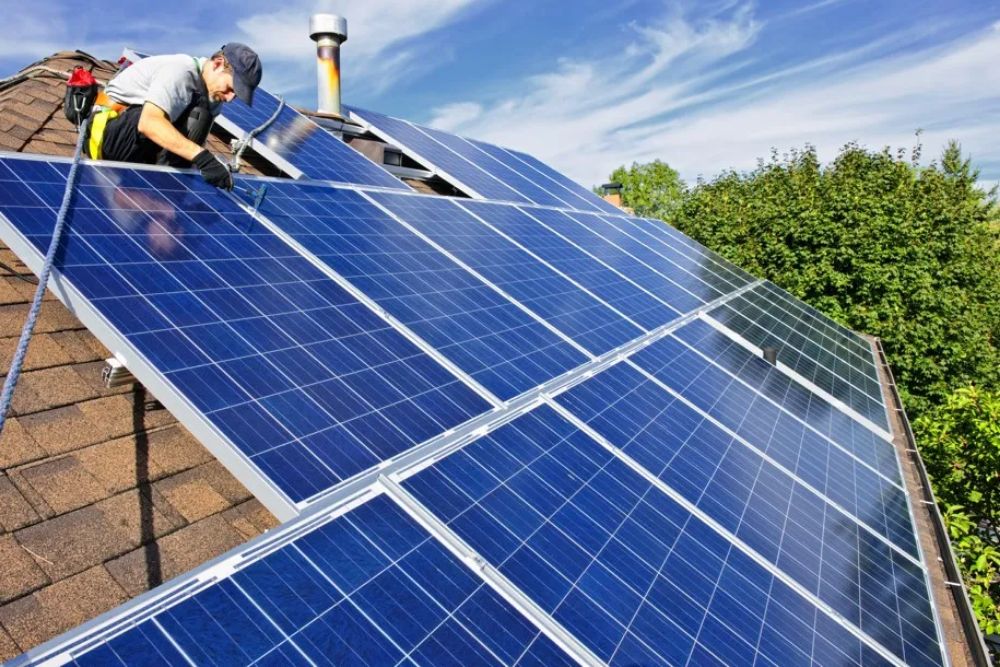
Nigeria faces a severe energy crisis due to funding issues, corruption & neglect. Expert Dr. Omoyele advocates for harnessing renewable energy (solar, wind, etc.) to address electricity shortages and unlock economic potential. Energy inclusion is vital for development.
Energy Crisis: Potentials Of Renewable Energy
Adebayo Obajemu
The term energy crisis has different meanings depending on the concept being discussed. It can mean a shortfall in electricity provision, the imbalances experienced in a country's natural resources (coal, oil, gas), or the adverse effects of energy utilization.
The focus is mainly on the energy crisis relating to electricity shortage because it significantly affects Nigeria's development .
The energy crisis in Nigeria is caused by an interplay of causes ranging from funding problems, energy loss, inadequate budgetary provision, corruption, leadership crisis, poor maintenance and neglect of projects, lack of technical skills, infrastructural decay, gas shortages, electricity bills/tariff shortages, low energy investments, power generating problems, and macroeconomic instability.
Dr.Olufemi Omoyele, Head of Entrepreneurship at Osun State University and an energy expert told GreenPlinth that " At the core of the energy crisis in the country is long standing apathy of successive governments to commit to the sector, in spite of the huge funds that could have been made available to the all important sector. Without energy inclusion, a nation can not develop.
Nigeria's renewable energy sources include wind, solar, biomass, hydro, and geothermal.
Omoyele contends that. "Nigeria is a blessed country with both clean and unclean energy resources. Amidst its abundance, the government is unable to provide a steady power supply. We need to examine the factors responsible for Nigeria's energy crisis, the types of renewable sources available in Nigeria, and the kinds of energy policies passed to ensure a steady power supply. When we undertake this, we will inevitably come to the conclusion that government has done nothing substantial in spite of the so-called Jonathan's liberalization of the sector. But I can tell you that the energy crisis in Nigeria is caused by funding problems, energy loss, inadequate budgetary provision, corruption, leadership crisis, poor maintenance and neglect of projects, lack of technical skills, infrastructural decay, gas shortages, electricity bills/tariff shortages, low energy investments, power generating problems, and macroeconomic instability. Second, Nigeria's renewable energy sources include wind, solar, biomass, hydro, and geothermal. But how much of this has been harnessed? This is a one million dollars question, and of course we all know the answer.
He called for effective harnessing of renewable energy sources to meet the country's electricity shortfall, and effective policies should be implemented that can provide solutions to the country's socio–economic problems.
Omoyele stressed the importance of energy inclusion, noting that energy is a commodity that can be traded and is as vital as oxygen. "Energy aids in providing necessities such as cooking, lighting, use of appliances, piped water, primary healthcare needs (vaccine storage, emergency, and intensive care), educational support, communication, and transportation. Energy enhances productive activities such as commerce, manufacturing, industry, mining and agriculture ", he said.
He noted that "On the macro level, energy access improves living standards, eradicates poverty, provides security, and fosters economic expansion. On the contrary, the absence of energy places significant limitations on economic output, the adoption of new technology, and the provision of essential social services like healthcare, education, and entertainment. These factors collectively affect the overall quality of life. Thus, the vitality of energy availability is echoed in the Sustainable Development Goal (SDG7), which strives for accessible, dependable, eco–friendly, and contemporary energy solutions to be achieved by 2030.
GreenPlinth's findings show that the number of people with electricity access has increased over time, about 940 million individuals do not have access to electricity globally. Also, 3 billion people lack access to clean cooking fuels.
It was learnt that " The Sub–Saharan African (SSA) economies face a dual challenge where 630 million individuals lack access to electricity, and an additional 790 million people heavily depend on biomass for cooking and heating. The SSA region has the lowest power generation capability and grapples with the most severe form of energy poverty. The absence of energy access impedes Africa's economic and human advancement, limiting households' ability to enhance their productivity and increase their earnings .
Omoyele averred that low energy access can be attributed to low income , a prominent feature of African economies.
Nigeria is the largest economy in Africa (US$535.34 billion) and has the highest population (218.5 million) . The Nigerian population has grown threefold since 1960, which is concerning as population growth indicates a rise in energy demand. A population increase without a commensurate increase in energy infrastructure can lead to an energy crisis. Former Nigerian President Olusegun Obasanjo expressed concern about the country's growing population, warning that without appropriate measures, the country's population could become a liability by 2050. Thus, the critical importance of population management was emphasized. In Nigeria, electricity access as a percentage of the population is 59.5 % . This means about 40 % lack access to electricity. As a result, the populace relies on generators that run on diesel, gas, and petrol to generate electricity. Nigerians spent $2.4 billion on generators amidst health and environmental hazards between 1996 and 2019 (24 Years). Lack of energy access has increased the unemployment rate in Nigeria and weakened the industrial sector. The Manufacturing Association of Nigeria (MAN) stated that they incur huge expenses for generator running and maintenance.
Furthermore, about 80 % of Nigeria's export revenue comes from crude oil. Nigeria has an extensive oil and gas reserve, which amounts to (oil: 37 billion barrels and gas: 5.8 trillion cubic meters). The dependency on oil has advantages—benefits in employment provision, infrastructure, and strategic relationships with other countries. However, Nigeria's oil dependency has led to socioeconomic development setbacks. The ongoing depletion of traditional energy sources, volatile international oil prices, the rising demand for carbon footprint reduction, and the efforts of developed and emerging nations to explore alternative energy types to satisfy their energy requirements will likely result in a substantial decrease in income in the foreseeable future . In addition, using unclean energy like oil and gas pollutes the environment .
Therefore, renewable energy usage is believed to be a solution to Nigeria's energy crisis. Renewable energy contributes to economic growth , creates employment opportunities , increases life expectancy , and contributes to ecological soundness .
Omoyele said the current efforts by GreenPlinth Africa should be commended, urging more subnationals to partner with it.


No comments yet. Be the first to share your thoughts!