

A Clean Cooking Revolution Nigeria Must Get Right
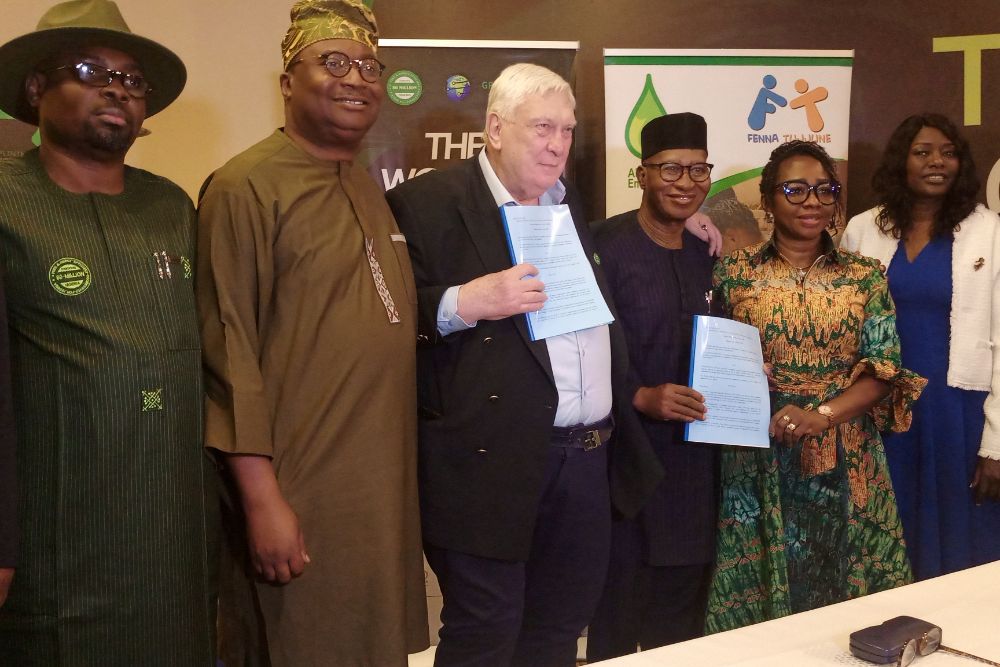
The agreement between Greenplinth Africa and Allgreen Energy NV to deliver 24 million clean cookstoves is more than another corporate handshake—it is a defining moment in Nigeria’s long, uneven journey toward sustainable energy access. With a bold $10 billion commitment tied to the broader 80 million clean cookstoves initiative, the ambition is unmistakable. What remains to be seen is whether execution will match intent.
For decades, millions of Nigerian households have depended on firewood, charcoal, and other biomass fuels for cooking. The consequences are well documented: dangerous indoor air pollution, rising deforestation, and an invisible public health crisis that disproportionately affects women and children. This initiative, if properly implemented, has the potential to confront these challenges head-on by providing not just cleaner stoves, but also free briquettes—an important detail that could determine real adoption.
Yet, large-scale interventions in Nigeria often falter not at the point of vision, but in the trenches of delivery. Distributing one million stoves monthly, as projected, is an ambitious logistical undertaking. It demands robust supply chains, transparent monitoring systems, and, crucially, sustained community engagement. Without these, even the most well-funded programme risks becoming another statistic of good intentions undermined by poor follow-through.
There is also the question of equity. As noted by Titilayo Oshodi, Special Adviser to the Lagos State Governor on Climate Change and Circular Economy, access to clean cooking is not merely a development issue—it is a matter of climate justice. Any meaningful rollout must prioritize rural and underserved communities, where reliance on traditional cooking methods is highest and the health impacts most severe. Urban-centered distribution would only deepen existing inequalities.
Furthermore, behavioural change cannot be assumed. The success of clean cookstove programmes globally has often hinged on user acceptance. Cultural cooking practices, taste preferences, and perceptions of new technologies all influence whether households will adopt or abandon the stoves. Public education campaigns and local stakeholder involvement will be as critical as the hardware itself.
The environmental upside, however, is significant. Reduced carbon emissions, slower deforestation, and improved indoor air quality align squarely with Nigeria’s climate commitments. If managed effectively, this project could position the country as a continental leader in clean cooking innovation—an area often overlooked in mainstream energy discourse.
Still, transparency must remain central. With billions of dollars at stake, Nigerians deserve clear timelines, measurable milestones, and public accountability. Investors, government partners, and implementing agencies must ensure that progress reports are not mere public relations exercises but verifiable indicators of impact.
The Greenplinth–Allgreen partnership offers a rare convergence of capital, policy attention, and technological solution. But success will not be measured by agreements signed in Lagos boardrooms. It will be judged in kitchens across rural and urban Nigeria—where cleaner air, healthier lives, and restored environments must become tangible realities, not distant promises.
Nigeria does not lack bold initiatives. What it needs now is disciplined execution.




No comments yet. Be the first to share your thoughts!